Patterns of Paubha
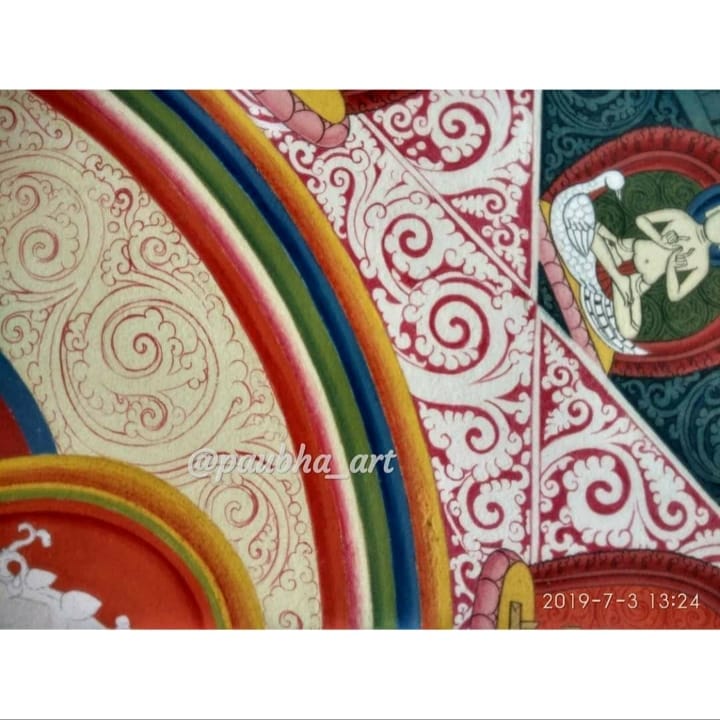
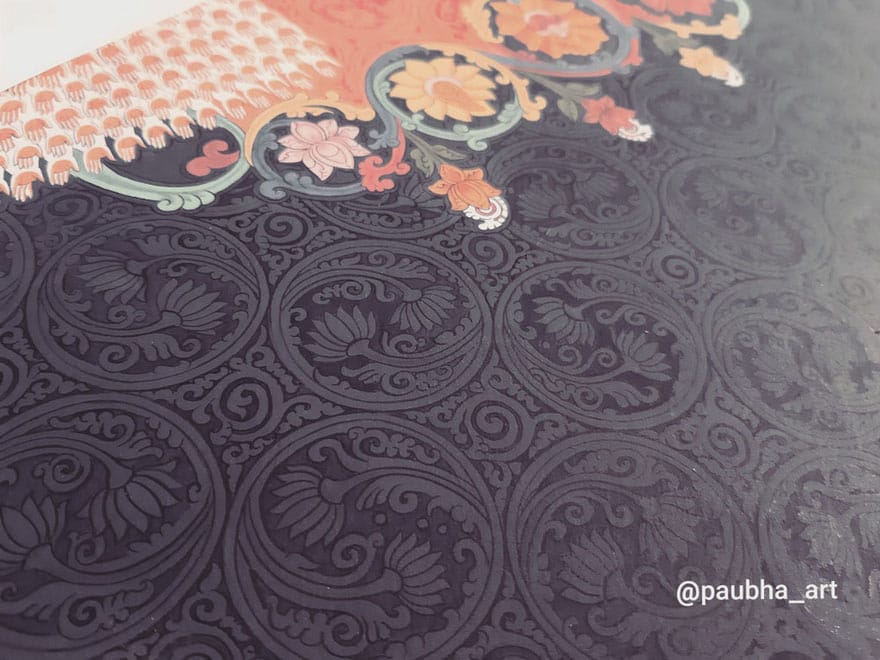
The most distinctive feature of Nepalese esoteric painting Paubha is this spiral pattern.
I studied Tibetan thangka for two years and then switched to paubha painting. It was only after a year and a half of learning paubha that I was able to paint satisfactory patterns.
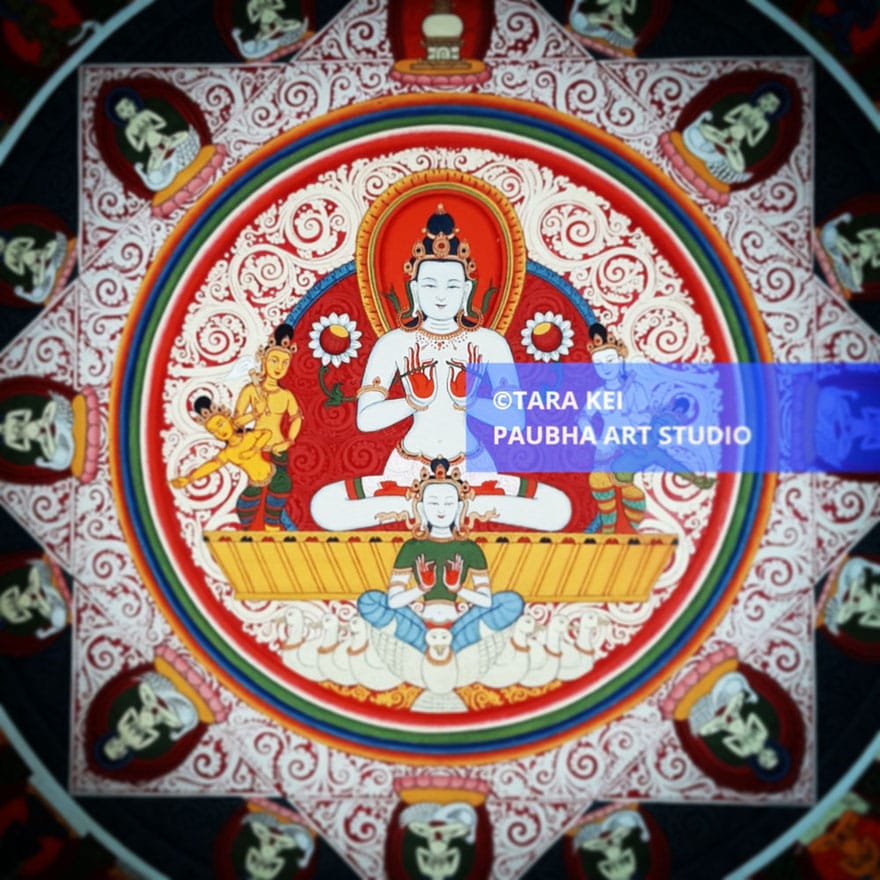
Chandra mandala(paubha)
In the center of this mandala is the white moon god Chandra holding a white lotus. The man seated in the front is named Ambala. He is pulling the reins of the seven white geese that drive the chariot.
The eight gods in the first circle may represent the planets.
The sixteen gods in the second circle represent the central god Chandra, and may also represent the phases of the moon.
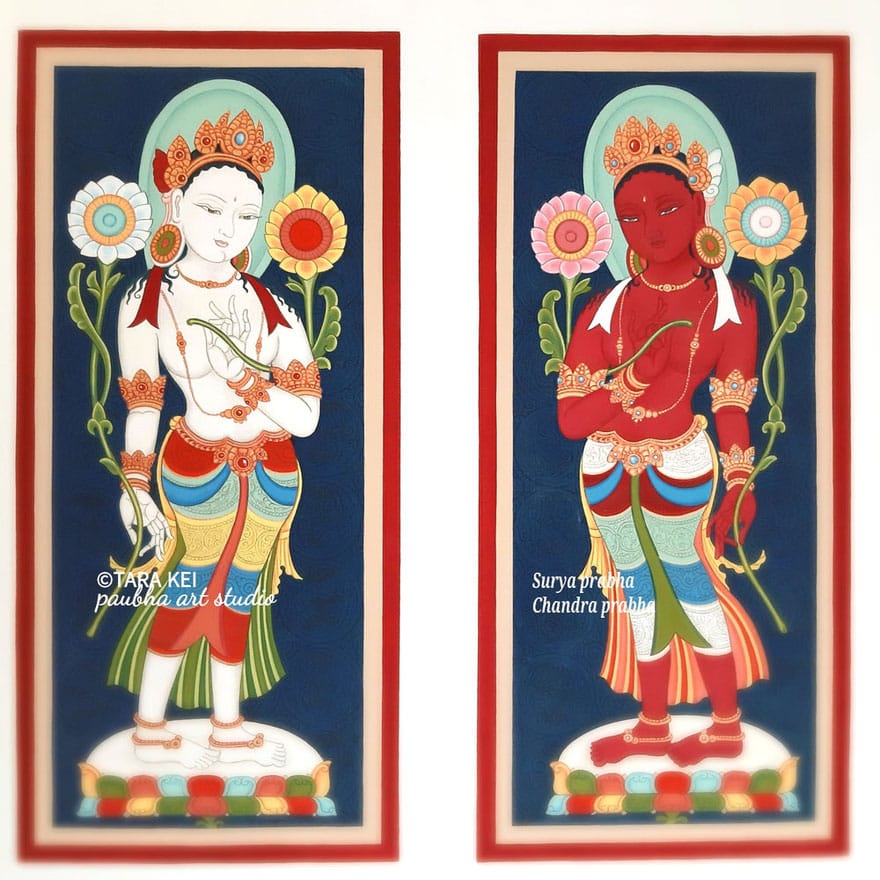
Surya prabha & Chandra prabha
This artwork is a modern Paubha inspired by a classical sketch.
It depicts the red-skinned Sunlight Bodhisattva and the white-skinned Moonlight Bodhisattva.
I deliberately swapped the colors of their traditional ribbons—giving the Sunlight Bodhisattva the white ribbon and the Moonlight Bodhisattva the red one—as a visual representation of Yin and Yang.
Paubha Pattern
Painting this pattern brings me the greatest joy. However, at the very beginning, it drained all my patience and brought tears to my eyes.
Hevajra Mandala
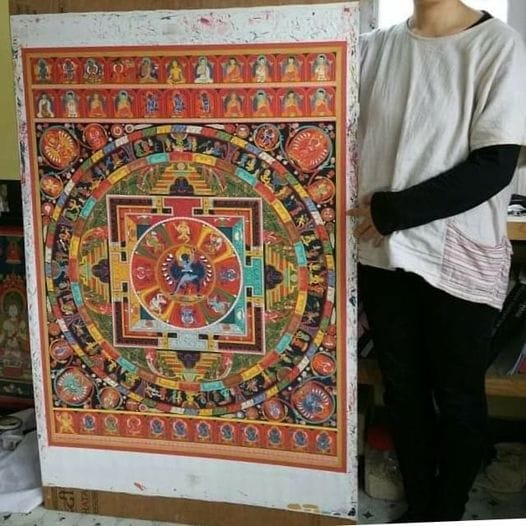
At the center of this mandala is the dark blue deity, Shri Hevajra.
He is depicted with eight faces, sixteen hands, and four legs in a dancing posture, holding a skull cup in each hand.
His primary pair of hands.
Tibetan Thangka Instructional Guide
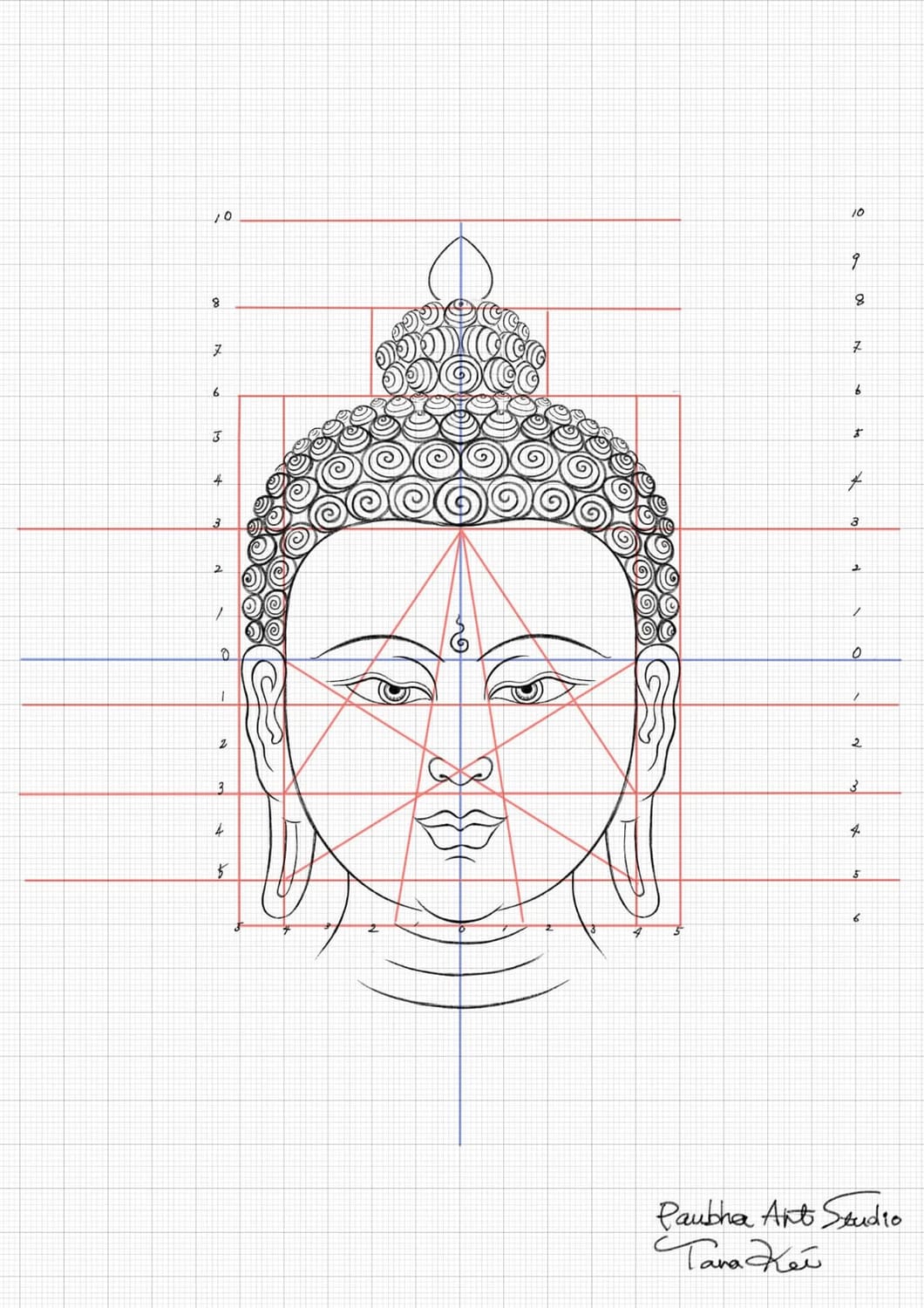
Tibetan Thangka painting is governed by strict, sacred proportions. These guidelines were designed to ensure that the image of the Buddha remains unchanged, now and forever.
I believe this practice goes one step deeper than tracing a Buddha image;
because every line and measurement is predefined, you never have to stress over creative choices. You can easily begin this journey with just a pencil, paper, and a ruler.
Exploring Paubha: Course Materials ポーバ(ネパール密教画)の教材
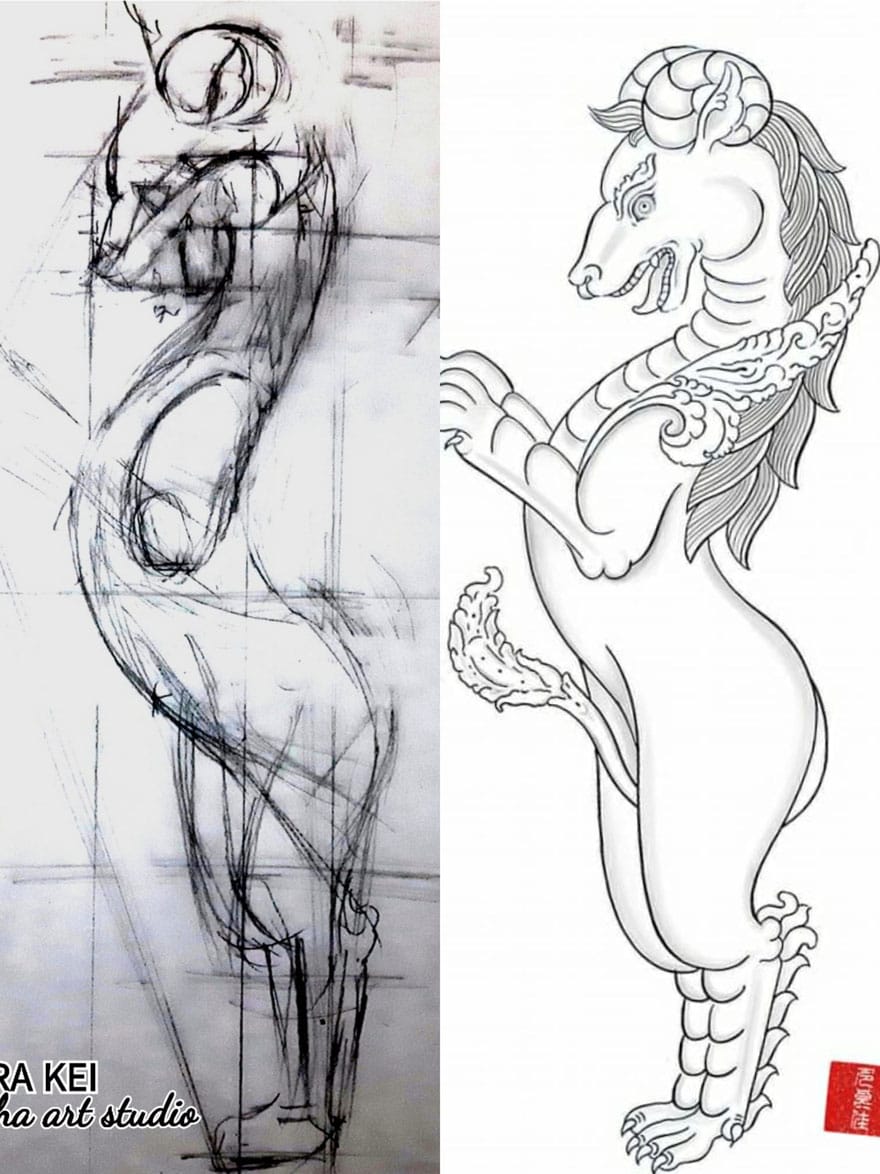
While Tibetan Thangka strictly follows fixed proportions, Paubha offers a different approach. In this course, we will study and copy classical masterpieces from the late 11th century to the 16th century—meaning a few basic sketching skills will come in handy.
This particular piece introduces a sacred beast known as the Sharabha. Though you might also spot it in Tibetan Thangkas, Paubha art portrays it in this distinctive style: a holy animal boasting the face and horns of a goat, a proud lion's mane, and the swift body and legs of a horse. This contrasts fascinatingly with Hinduism, where the Sharabha is traditionally imagined as a mixture of a lion and a bird.
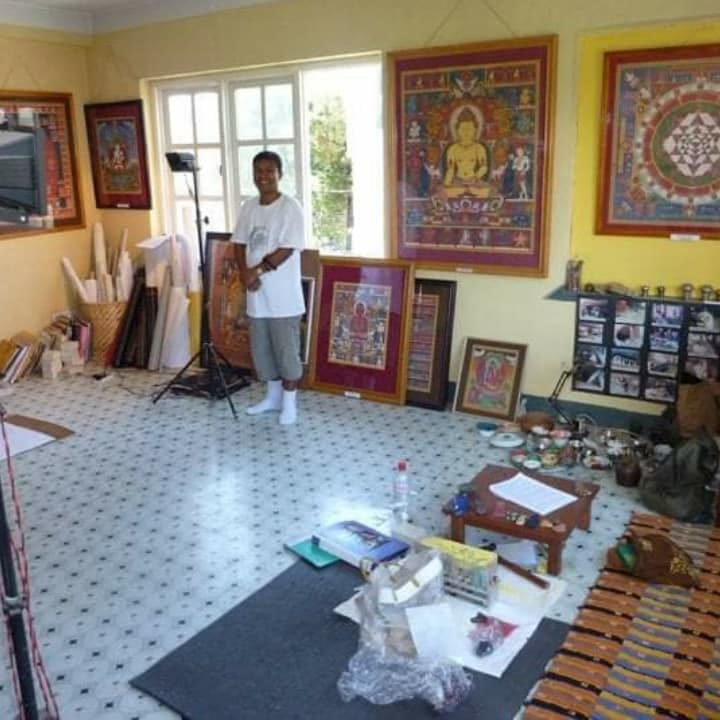
He is my paubha teacher. He is very friendly.
I cried many times that I could not draw beautiful lines in this class. But the Buddha trusted me and gave me the paubha. So I studied in this place.
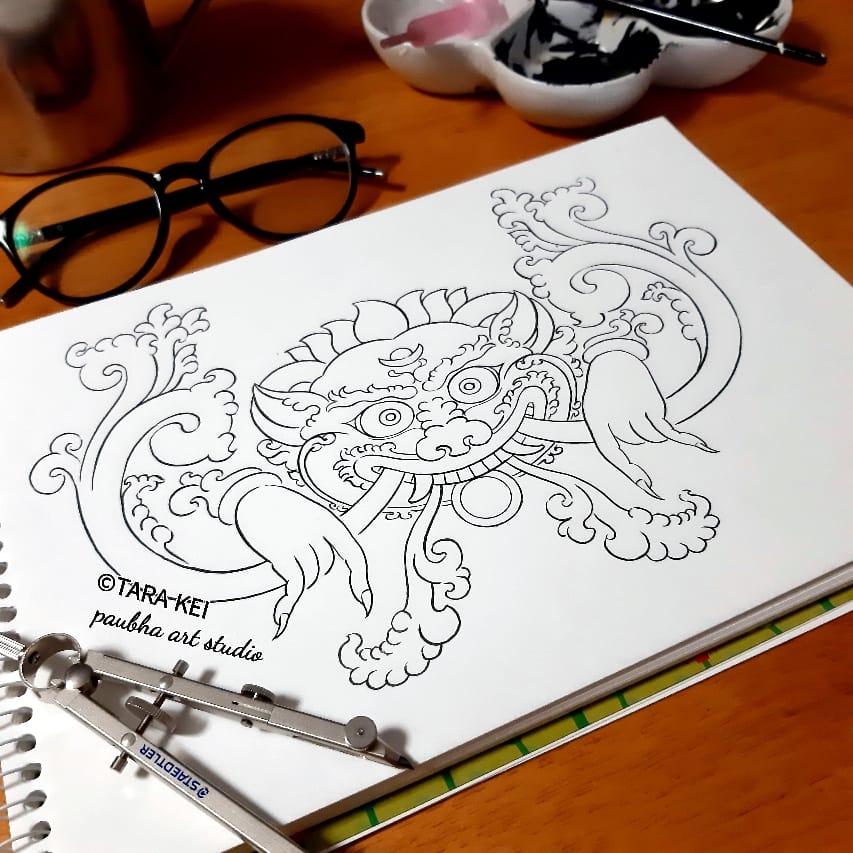
The Kirtimukha is often used as a motif surmounting the pinnacle of a temple or the image of a deity, especially in South Indian architecture.
What he is holding in his hands is a designed snake.